Consumers Remember Consistency More Than They Remember Perfection
Consumers Remember Consistency More Than They Remember Perfection
Food companies spend enormous amounts of time trying to make products memorable.
Marketing teams develop campaigns.
Packaging designers refine every visual detail.
Product developers improve recipes.
Operations teams optimize manufacturing efficiency.
Every department contributes to the same objective: building a brand consumers trust.
Interestingly, trust is rarely created by a single exceptional experience.
It is usually built through dozens of ordinary experiences that feel exactly the same.
That is the real meaning of consistency.
Consumers Don't Measure Quality the Way Manufacturers Do
Inside a food manufacturing facility, quality is measured with numbers.
Dimensions.
Temperatures.
Tolerances.
Process capability.
Inspection records.
Consumers never see those measurements.
Their evaluation happens much more simply.
Did the product meet expectations?
Did it cook the way it usually does?
Would they buy it again?
From the consumer's perspective, quality is remembered emotionally long before it is understood technically.
Consistency Quietly Protects Brand Reputation
Brands rarely lose customer confidence because of one isolated production run.
Confidence erodes when small inconsistencies begin appearing over time.
A product that cooks differently.
A package that feels unfamiliar.
An experience that no longer matches previous purchases.
Consumers may never identify the exact technical reason.
They simply begin to feel that something has changed.
Once that feeling appears, rebuilding confidence often requires far more effort than maintaining it in the first place.
Small Components Often Influence Large Perceptions
Not every part inside a food package carries equal visibility.
Some components work entirely behind the scenes.
Others become part of the consumer experience.
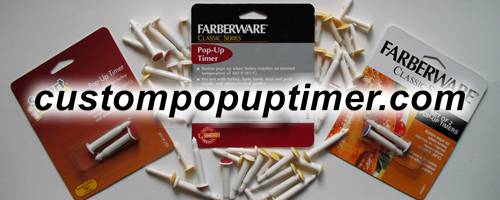
A disposable pop-up timer belongs to the second category.
It becomes part of the final interaction between the product and the customer.
When it performs predictably, consumers rarely think about it.
When it behaves unexpectedly, it becomes impossible to ignore.
This is one reason experienced food manufacturers treat seemingly simple components with remarkable attention.
Reliability Is an Engineering Achievement
Reliable products are sometimes mistaken for simple products.
In reality, predictable performance is usually the result of disciplined engineering.
Material selection.
Process control.
Production repeatability.
Inspection procedures.
Supplier qualification.
None of these activities appear on supermarket shelves.
Yet together they determine whether consumers receive the same experience every time they choose the product.
Long-Term Supplier Relationships Are Built on Predictability
Purchasing managers often describe excellent suppliers in surprisingly similar ways.
"We don't have to think about them."
At first, that sounds almost dismissive.
It is actually one of the highest compliments a manufacturer can receive.
Shipments arrive as expected.
Specifications remain stable.
Questions receive clear answers.
Production continues without unnecessary surprises.
Dependability creates operational freedom.
Customization Should Preserve Consistency, Not Complicate It
Every OEM project introduces change.
The challenge is ensuring those changes improve the product without introducing unnecessary variability.
Successful customization respects established manufacturing discipline.
Activation temperatures may change.
Packaging may evolve.
Branding may become unique.
Yet the customer's expectation remains remarkably consistent.
The product should work exactly as promised.
Good customization protects that expectation instead of distracting from it.
Manufacturing Focus Creates Long-Term Stability
Factories dedicated to one product category often develop a different perspective from manufacturers producing hundreds of unrelated items.
Improvement becomes continuous rather than occasional.
Engineering knowledge accumulates.
Production teams recognize patterns.
Quality systems mature around one process instead of many.
Over time, this specialization becomes difficult for general manufacturers to replicate.
Not because they lack capability, but because focus itself becomes a competitive advantage.
About PopNReady
At PopNReady, our manufacturing philosophy has remained unchanged since 2006.
Focus on one product.
Improve it continuously.
Support customers over the long term.
Backed by LIOU MANUFACTURING & LIOU E-COMMERCE, we manufacture disposable pop-up timers exclusively for international B2B customers. Every product is produced using food-grade PA66 nylon, BPA-free engineering materials, food-grade thermal wax free from heavy metals and soft metals, and precision metal spring assemblies. Our manufacturing systems are designed to achieve activation accuracy of approximately ±2°F while complying with FDA, EU, and BRC standards.
Today, we support poultry processors, meat manufacturers, frozen food producers, supermarket suppliers, central kitchens, and OEM partners seeking dependable factory-direct manufacturing with consistent quality over time.
Final Thoughts
Consumers may remember an outstanding meal.
Brands, however, are built on something much quieter.
The confidence that the next purchase will deliver the same experience as the last.
Every reliable component contributes to that expectation.
Every consistent manufacturing decision reinforces it.
In the end, consistency is not simply a quality objective.
It is one of the most valuable promises a food brand can make.