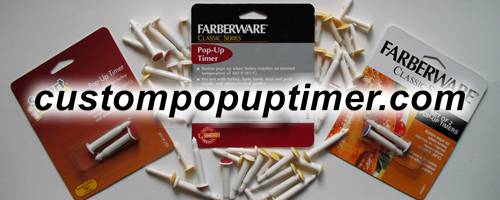
Custom Pop Up Timer Manufacturing Process: From Product Concept to Bulk Production
Custom Pop Up Timer Manufacturing Process: From Product Concept to Bulk Production
For global food companies, developing a custom disposable pop up timer requires more than selecting an existing product. A successful OEM project involves communication, technical evaluation, specification confirmation, production preparation, and quality control.
Understanding the manufacturing process helps buyers make better decisions when selecting a disposable pop up timer supplier. It also allows brands, processors, and distributors to plan their product development more efficiently.
This article explains the complete OEM manufacturing process of custom pop up timers, from the initial concept stage to final bulk production.
Why Understanding the OEM Process Matters
Many companies looking for custom temperature indicators focus only on the final product. However, reliable performance depends on the entire manufacturing process behind it.
A professional OEM manufacturer must coordinate multiple areas, including:
- Product requirements
- Temperature specifications
- Material selection
- Production capability
- Quality control
- Packaging solutions
A clear development process reduces communication problems and helps ensure the final product matches customer expectations.
Step 1: Understanding Customer Requirements
Every custom pop up timer project begins with understanding the customer's application.
Before production planning begins, manufacturers usually need information such as:
- Food application
- Target market
- Required activation temperature
- Expected order quantity
- Packaging requirements
- Customization expectations
For example, a turkey processor, frozen food manufacturer, and retail brand may have completely different requirements even when using the same product category.
Step 2: Selecting the Appropriate Product Specification
After understanding the application, the manufacturer evaluates the most suitable product specification.
Important factors include:
- Temperature activation point
- Product size
- Indicator structure
- Packaging format
- Production quantity
The goal is to ensure the disposable pop up timer matches the intended food application rather than simply providing a standard product.
Step 3: Custom Temperature Development
Temperature activation is one of the most important characteristics of a disposable pop up timer.
Different food products may require different temperature indication points depending on product design, cooking instructions, and market requirements.
OEM customers may request customized temperature specifications for applications such as:
- Turkey products
- Chicken products
- Poultry meals
- Meat products
- Ready-to-cook foods
Step 4: Confirming Materials and Product Structure
Material selection plays an important role in food-related products.
Professional manufacturers evaluate:
- Food-grade material requirements
- Product durability
- Temperature response performance
- Component compatibility
The final product depends on the cooperation between material quality, engineering design, and manufacturing control.
Step 5: Packaging Design and Private Label Development
For retail brands and private label customers, packaging is an important part of the product development process.
Custom packaging options may include:
- Retail blister cards
- Printed packaging
- Display boxes
- Bulk export cartons
- Private label solutions
Packaging requirements should be discussed early because they influence production planning and logistics arrangements.
Step 6: Sample Evaluation and Approval
Before mass production, buyers typically review product samples and confirm specifications.
Sample evaluation may include:
- Appearance checking
- Activation performance review
- Packaging confirmation
- Application testing
This stage helps ensure both the buyer and manufacturer have the same understanding before moving into large-scale production.
Step 7: Bulk Production and Quality Control
Once specifications are confirmed, the project enters the production stage.
For commercial food customers, production consistency is critical.
Important manufacturing controls include:
- Incoming material inspection
- Production process monitoring
- Assembly consistency
- Finished product inspection
- Batch management
A reliable OEM supplier must maintain stable quality throughout the entire production cycle.
Step 8: Export Packaging and Shipment Preparation
After production completion, products are prepared according to customer shipping requirements.
International buyers usually consider:
- Carton specifications
- Shipping quantity
- Documentation requirements
- Delivery schedule
Experienced export manufacturers understand the importance of smooth international logistics coordination.
Common Mistakes Buyers Make During OEM Projects
Not Defining Requirements Clearly
Unclear product expectations can create delays. Buyers should provide detailed information about application, temperature requirements, and packaging needs.
Choosing a Supplier Without Product Specialization
Disposable pop up timers require specific manufacturing knowledge. A supplier with deeper product specialization can usually provide better technical support.
Ignoring Long-Term Supply Capability
For food companies, the goal is usually not one order but a stable supply relationship.
Production capacity, quality systems, and export experience should all be considered.
Frequently Asked Questions About Custom Pop Up Timer Manufacturing
How long does a custom pop up timer project take?
The timeline depends on product requirements, customization level, packaging needs, and order quantity.
Can buyers customize the temperature activation point?
Yes. OEM manufacturers can develop different temperature specifications according to customer requirements.
Can packaging be customized for retail products?
Yes. Private label and retail packaging solutions are common requirements for food brands.
What should companies prepare before contacting a manufacturer?
Companies should prepare information about product application, target market, quantity requirements, and desired customization options.
Why Working With a Specialized Manufacturer Creates Better Results
A successful custom pop up timer project depends on cooperation between the buyer and manufacturer throughout every stage of development.
From product specification and material selection to quality control and bulk production, each step contributes to the final product performance.
For global food companies, choosing a specialized disposable pop up timer manufacturer provides stronger technical support, more efficient customization, and a more reliable supply foundation.
Disclaimer: The term "pop up timer" is a commonly used product category name referring to disposable cooking temperature indicators. We are an independent manufacturer based in China specializing in disposable pop up timers and temperature indicators since 2006. We have no affiliation, authorization, partnership, or relationship with any other brands or companies. Our products are independently manufactured and supplied to global B2B customers.