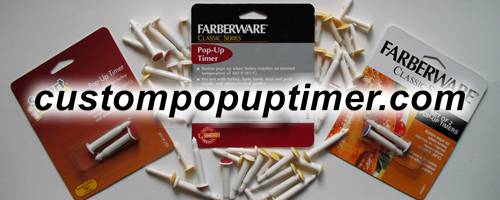
Custom Pop Up Timers for Poultry Brands: How Temperature Indicators Create Better Product Solutions
Custom Pop Up Timers for Poultry Brands: How Temperature Indicators Create Better Product Solutions
The poultry industry continues to evolve as manufacturers compete through product quality, convenience, and consumer experience. For poultry brands, creating a successful product requires attention to many details, including packaging, preparation guidance, and customer confidence.
Custom pop up timers provide poultry companies with a practical temperature indication solution that can improve product usability while supporting brand differentiation.
From whole turkey products to chicken-based ready-to-cook foods, customized temperature indicators can become an important part of modern poultry product development.
Why Poultry Brands Use Custom Temperature Indicators
Poultry products often require careful cooking preparation. Consumers want confidence that their food has been properly prepared, while brands want to provide products that are easy to use.
A disposable pop up timer can help address these needs by providing a simple visual indication during cooking.
For poultry manufacturers, this can support:
- Improved consumer confidence
- Better product convenience
- Enhanced product value
- Stronger brand positioning
Applications of Custom Pop Up Timers in Poultry Products
Whole Turkey Products
Turkey products are one of the most recognized applications for disposable pop up timers.
Holiday turkey products, retail turkey packages, and premium turkey offerings may use temperature indicators as part of the overall consumer experience.
Chicken Products
Chicken products are widely consumed across global markets.
Customized temperature indicators can support different chicken applications, including whole chicken products and specialty poultry items.
Ready-to-Cook Poultry Products
The growth of convenience foods has increased demand for products that simplify preparation.
Temperature indication features can help brands create easier-to-use poultry products for consumers.
How Customization Helps Poultry Brands
Matching Product Requirements
Different poultry products may require different temperature specifications depending on product size, cooking method, and market application.
Customization allows brands to develop solutions that better match their products.
Supporting Retail Differentiation
Poultry products often compete in crowded retail environments.
Additional functional features can help brands create stronger product recognition and customer value.
Improving Consumer Experience
Consumers appreciate products that reduce uncertainty during preparation.
A clear cooking indication solution can make the preparation process easier and more convenient.
Important Considerations When Developing Poultry Pop Up Timers
Product Size and Cooking Conditions
The design of a temperature indicator should consider the actual food application.
Important factors include:
- Product weight
- Cooking environment
- Preparation method
- Target market requirements
Packaging Compatibility
Poultry products often involve complex packaging systems.
The temperature indicator solution should work together with the final product packaging and distribution process.
Production Requirements
Large poultry manufacturers require stable supply and consistent product performance.
A suitable OEM partner should understand commercial production needs.
Why Poultry Companies Choose OEM Manufacturers
OEM cooperation allows poultry companies to develop products that match their specific market strategies.
Benefits include:
- Product customization
- Packaging flexibility
- Direct technical communication
- Long-term supply cooperation
The OEM Process for Poultry Temperature Indicator Solutions
Application Discussion
The manufacturer reviews the poultry product requirements and intended use.
Specification Development
The project team confirms suitable temperature and packaging requirements.
Sample Testing
Samples are evaluated before commercial production.
Mass Production
After approval, production follows confirmed specifications and quality requirements.
Common Challenges in Poultry Temperature Indicator Projects
Choosing a General Supplier Instead of a Specialist
Products used in food applications require specific manufacturing knowledge.
Ignoring Long-Term Supply Needs
Poultry companies often require stable supply for seasonal and regular production.
Focusing Only on Initial Cost
Reliable quality and production consistency are important factors for long-term success.
Frequently Asked Questions About Poultry Custom Pop Up Timers
Can pop up timers be customized for turkey and chicken products?
Yes. Custom solutions can be developed according to different poultry applications and product requirements.
Why do poultry brands use disposable temperature indicators?
They help provide cooking guidance and improve consumer confidence.
Can OEM suppliers support large poultry processors?
Yes. Specialized manufacturers can support bulk production and long-term supply programs.
Are custom pop up timers suitable for retail poultry products?
Yes. They can be integrated into many retail-ready poultry applications.
Supporting Better Poultry Products Through Custom Solutions
For poultry brands, product success depends on creating reliable, convenient, and differentiated solutions.
Custom pop up timers provide a simple way to add functional value while improving the cooking experience for consumers.
By working with an experienced OEM manufacturer, poultry companies can develop temperature indicator solutions that support both product innovation and long-term market growth.
Disclaimer: The term "pop up timer" is a commonly used product category name referring to disposable cooking temperature indicators. We are an independent manufacturer based in China specializing in disposable pop up timers and temperature indicators since 2006. We have no affiliation, authorization, partnership, or relationship with any other brands or companies. Our products are independently manufactured and supplied to global B2B customers.