Why Experienced Food Companies Rarely Change a Reliable Component Supplier
Why Experienced Food Companies Rarely Change a Reliable Component Supplier
In procurement meetings, cost almost always enters the conversation.
Curiously, companies with mature quality systems often spend just as much time discussing something less obvious.
Stability.
Not because stable suppliers are cheaper.
Because replacing a dependable supplier introduces uncertainty into a production system that has already been carefully optimized.
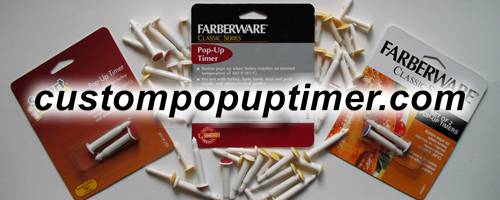
This is particularly true for specialized components like disposable pop-up timers, where the part itself may represent only a small percentage of total product cost but plays a visible role in the consumer experience.
Every Approved Supplier Represents Thousands of Small Decisions
Supplier approval is rarely a single event.
It is the result of engineering reviews, material evaluations, production trials, documentation, food-contact compliance, logistics planning, and commercial negotiations.
Months of work often stand behind what eventually becomes a routine purchase order.
Changing suppliers means repeating much of that process.
That investment explains why experienced manufacturers evaluate supplier relationships over years rather than individual quotations.
Consistency Has Compounding Value
One reliable shipment is useful.
One hundred reliable shipments create something more valuable.
Confidence.
Production managers become comfortable scheduling manufacturing.
Quality teams become familiar with inspection data.
Purchasing departments spend less time solving unexpected issues.
The supplier gradually becomes integrated into the customer's operational rhythm.
This kind of confidence cannot be purchased overnight.
Switching Costs Are Often Invisible
The financial difference between two quotations is easy to calculate.
The operational cost of changing suppliers is considerably more difficult.
Engineering validation.
Sample approvals.
Production adjustments.
Additional inspections.
Documentation updates.
Internal meetings.
These activities rarely appear on an invoice, yet they consume valuable time across multiple departments.
For this reason, the lowest unit price does not always represent the lowest total cost.
Specialization Reduces Learning Curves
Manufacturers dedicated to one product category develop practical knowledge that extends beyond technical drawings.
Recurring production challenges become familiar.
Customer applications become easier to understand.
OEM requests can often be evaluated more efficiently because similar situations have already been encountered before.
This accumulated experience benefits both sides of the partnership.
About PopNReady
Since 2006, PopNReady has specialized exclusively in disposable pop-up timers for global B2B customers.
Supported by LIOU MANUFACTURING & LIOU E-COMMERCE, we manufacture factory-direct solutions using food-grade PA66 nylon, BPA-free engineering materials, food-grade thermal wax free from heavy metals and soft metals, and precision metal spring assemblies. Every production process is designed to achieve activation accuracy of approximately ±2°F while complying with FDA, EU, and BRC requirements.
Final Thoughts
The strongest supplier relationships are rarely built on a single successful order.
They are built on years of predictable performance.
For manufacturers focused on long-term product quality, consistency is often the most valuable service a supplier can provide.